
Case Study
Building a Barcode-Based Medication Inventory System for an Animal Shelter
DaleyPWS designed and developed a custom medication inventory system for the Humane Society of Walden, giving staff a faster way to receive, dispense, track, and report on medications while maintaining a clear history of inventory activity.
The Challenge
The Humane Society of Walden needed a more reliable way to manage medications and other important inventory.
A simple spreadsheet could show what was currently on hand, but medication management required more than a current count. Staff also needed to know where an item was stored, when it expired, what lot it came from, why a quantity changed, who completed the transaction, and which program or animal received it.
The organization also wanted to reduce manual entry by using a barcode scanner and receive alerts when medications were running low or approaching expiration.
At the same time, New York was introducing stronger animal-shelter recordkeeping requirements. The system needed to support more consistent medication documentation without becoming difficult for staff to use during normal day-to-day work.
Making Inventory Easier to Track
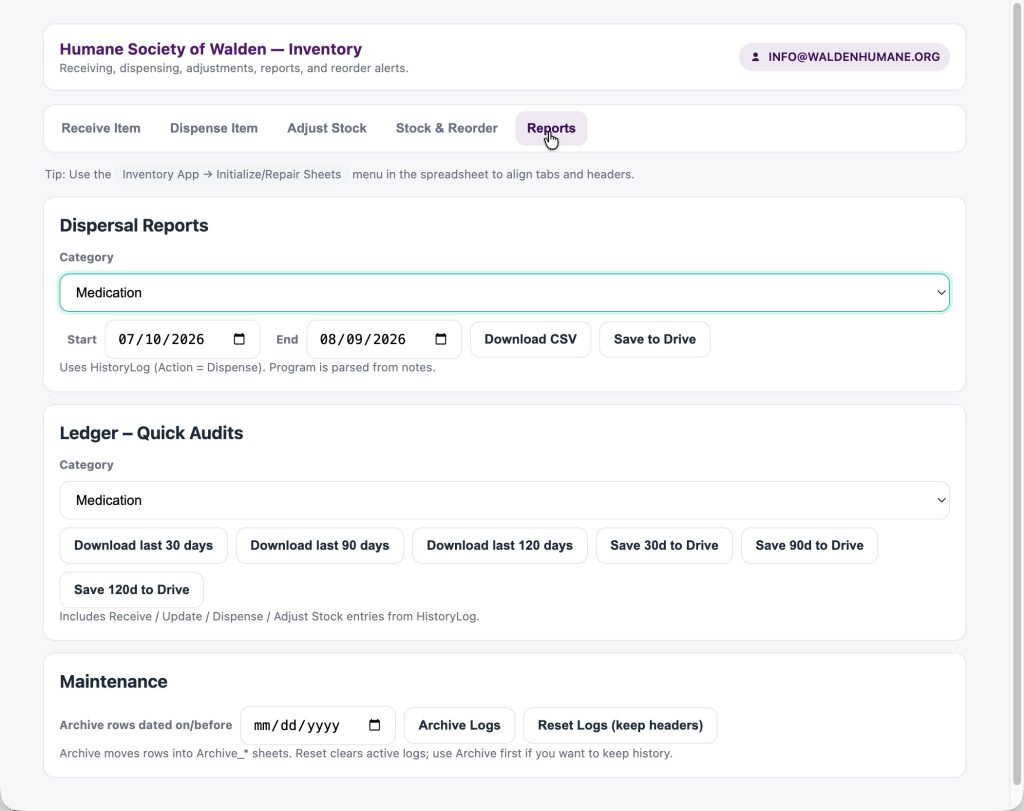
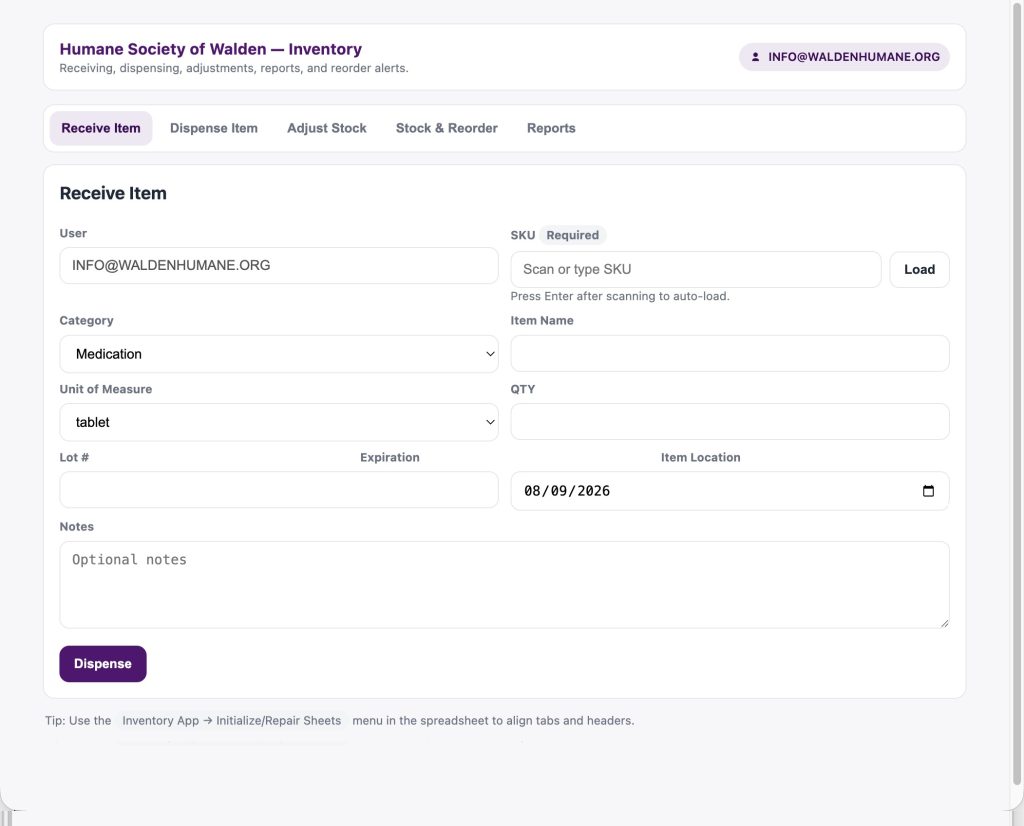
We built a custom web-based inventory application using Google Apps Script, Google Sheets, Google Drive, HTML, CSS, and JavaScript.
Staff work through a simple interface rather than editing inventory records directly in a spreadsheet.
The barcode or SKU serves as the main identifier for each item. Staff can scan an existing medication to bring up its current information, including quantity, storage location, lot, expiration date, and other details.
From there, they can receive new stock, dispense medication, or make a documented adjustment.
The basic process is straightforward:
Scan the item > review the current record > choose the action > update the quantity > record the transaction
Every change is added to the transaction history so the organization can see not only what is currently in stock, but how that quantity changed over time.
Receiving, Dispensing, and Adjusting Inventory
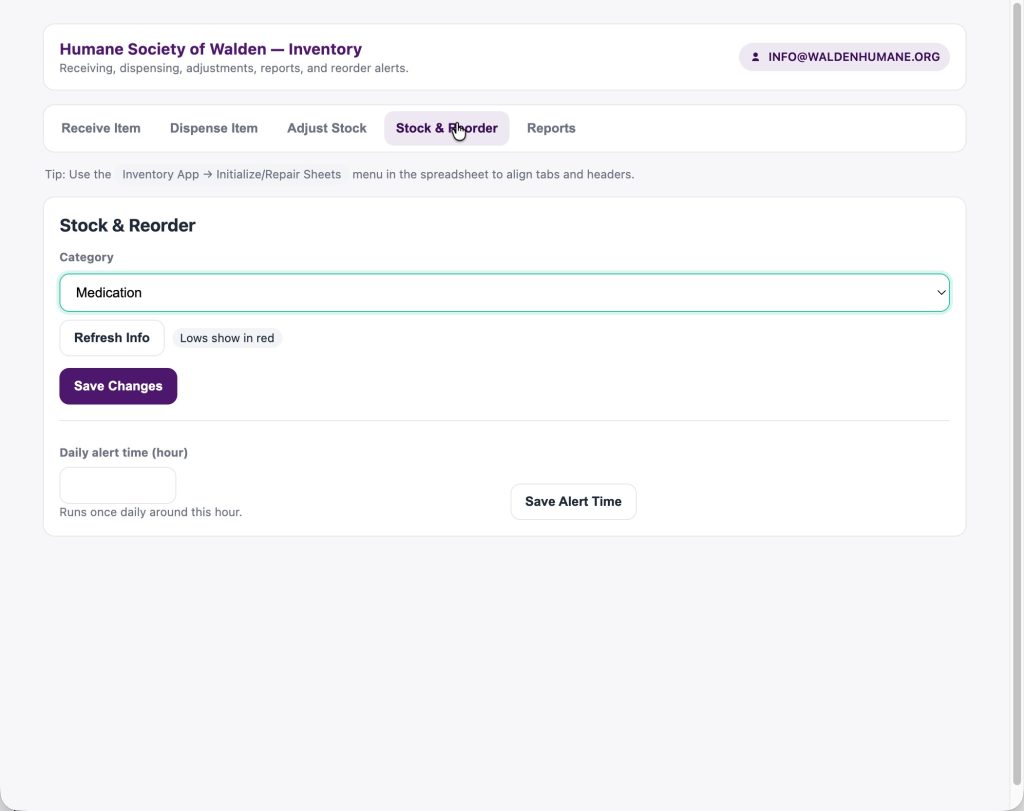
When new medication arrives, staff can scan the item and add the quantity received.
For an existing item, the system loads the information already on file. New items can be added through the same process, with consistent categories, units of measure, storage locations, lot information, and expiration dates.
When medication is dispensed, staff can record the quantity along with information such as the program, animal ID, date, and notes when applicable.
The system checks the available balance before completing the transaction and prevents staff from dispensing more than is currently recorded as available.
A separate adjustment process handles situations such as breakage, loss, returns, or differences found during a physical inventory count. Rather than simply changing the number on hand, the system records the reason for the adjustment and preserves it in the activity history.
Monitoring Low Stock and Expiration Dates
Keeping accurate inventory records is useful only if staff can act on them.
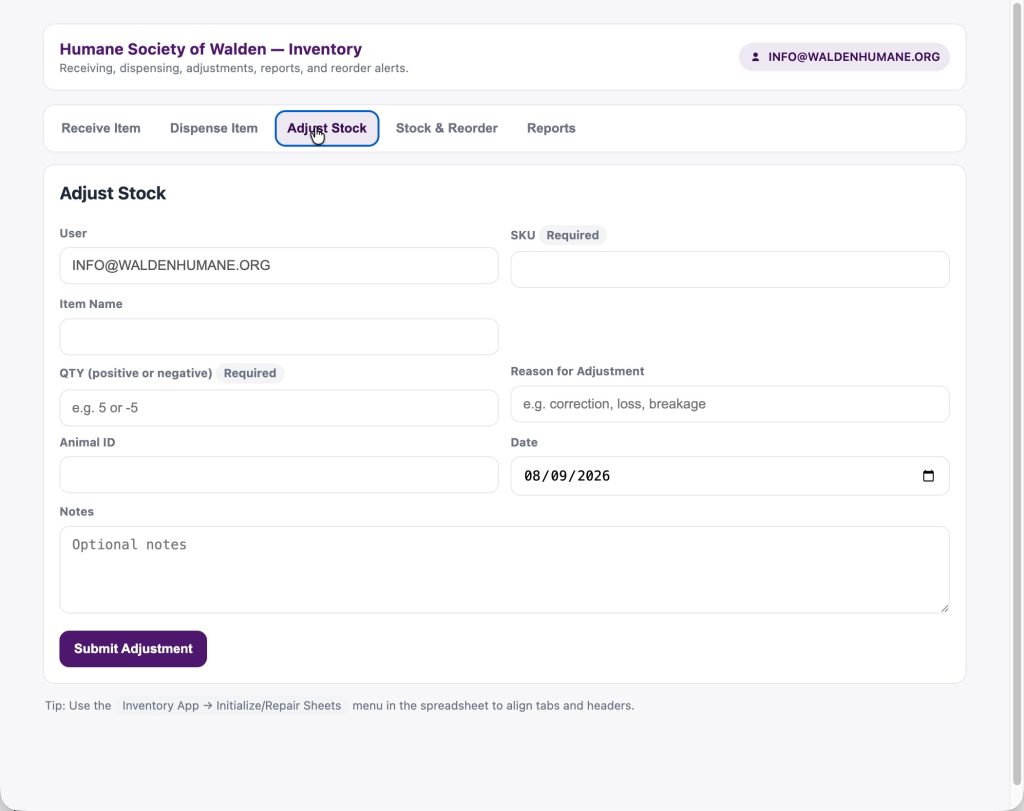
For medications and microchips, authorized users can establish reorder thresholds for individual items. When inventory reaches or falls below that level, the system can send an email alert showing the item, quantity on hand, reorder level, storage location, and recent activity.
The application also checks expiration dates and can notify staff about items that have expired or need attention.
These automated checks help staff identify potential inventory issues without requiring someone to continually review the entire stock list manually.
Creating a Clear History of Medication Activity
One of the most important goals of the project was preserving the history behind each inventory change.
Depending on the transaction, the system can record information such as:
- User and timestamp
- Item and SKU
- Quantity change
- Lot number
- Expiration date
- Storage location
- Reason for the transaction
- Program
- Animal ID
- Notes
That provides a more complete record than simply maintaining a current inventory balance.
The application was designed to support the Humane Society’s medication-control and recordkeeping processes alongside its separate animal medical records and veterinary procedures. It does not replace those clinical or legal requirements.
Making Inventory Information Easier to Use
Staff can view current stock by category, including quantities, storage locations, expiration dates, and reorder status.
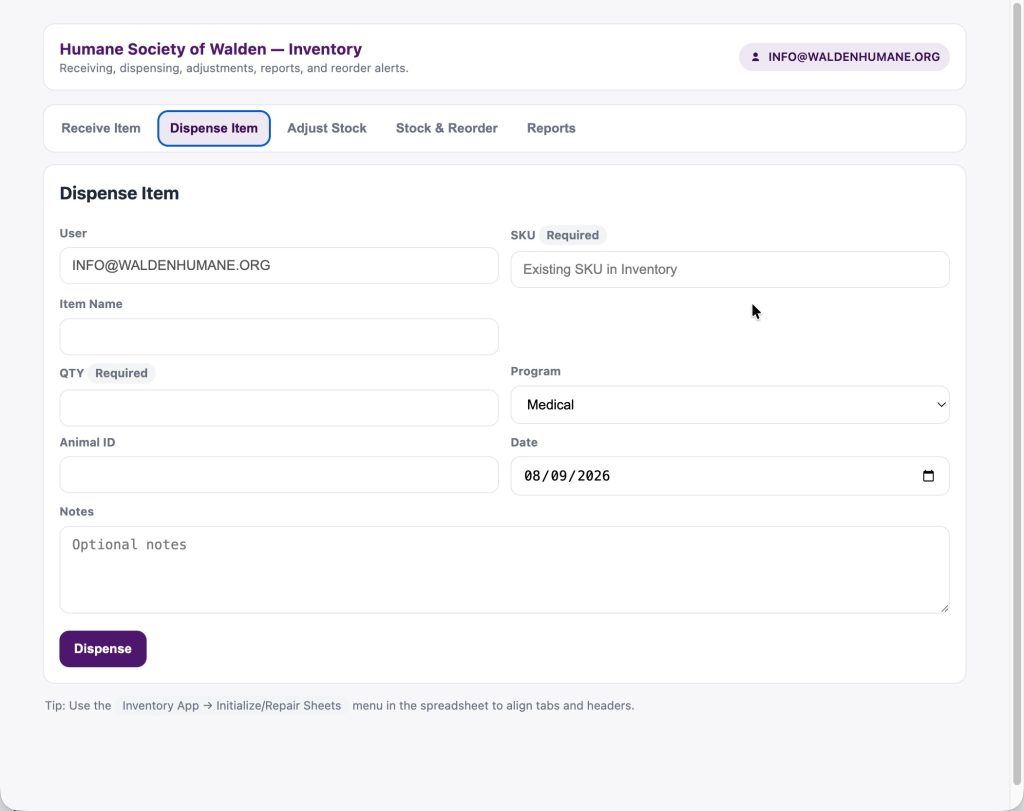
The system also turns the transaction history into reports that can be used for internal review and program management.
Available reporting includes:
- Dispensed items over a selected date range
- Medication or supply activity by category
- Quantity changes and adjustments
- Program and animal information where applicable
- Lot and expiration information
- Inventory transaction history
Reports can be downloaded as CSV files or saved to Google Drive.
Historical activity can also be archived so older records remain available without making the active inventory file difficult to manage.
The Result
The Humane Society now has a centralized inventory system that connects current medication counts with the history behind those numbers.
Staff can scan items instead of repeatedly entering the same information, record receiving and dispensing activity in a consistent way, identify low or expiring stock, and generate reports without reconstructing activity manually.
The system also provides a stronger record of who changed inventory, when the change occurred, and why.
Although medication management was the immediate priority, the application was built with enough flexibility to accommodate other inventory categories, including supplies, food, and a future pet pantry.
The result is a system designed around the way the organization actually manages inventory today while leaving room for its needs to expand over time.
Related Services
Animal Shelter & Rescue Websites
We help shelters and rescues improve their websites, connect the systems they rely on, and develop practical digital tools that make everyday work easier for staff and volunteers.
Custom Website Tools & Development
When an off-the-shelf plugin or form is not enough, we can build custom functionality, integrations, and web-based tools around the way your organization actually works.
Digital Consulting & Workflow Improvement
We help organizations look at their existing tools and workflows, identify where manual work is creating problems, and determine practical ways to improve the process.
Need a Better Way to Manage a Manual Process?
If your organization relies on spreadsheets, paper records, or disconnected tools to manage an important recurring process, we can help determine whether a custom web-based tool or integration could make it simpler and more reliable.